Walk into any specialty coffee shop and you'll see bags proudly labeled 'single origin.' The term has become a marker of quality, a signal that this coffee is somehow special. But the label is less straightforward than it appears. Single origin can mean wildly different things depending on who's using it — from an entire country to a specific plot on a single farm. Understanding these distinctions will make you a smarter buyer and a more appreciative drinker.
Defining Single Origin
At its broadest, single origin means coffee sourced from one geographic location — as opposed to a blend, which combines beans from multiple origins. But 'one location' is deliberately vague. A coffee labeled 'single origin Colombia' might contain beans from dozens of farms across different regions of the country. Meanwhile, a 'single estate' coffee comes from one specific farm, and a 'micro-lot' narrows it further to a particular section of that farm, harvested at a specific time.
The specialty coffee industry has developed a hierarchy of specificity: Country → Region → Cooperative → Estate → Micro-lot → Nano-lot. The more specific the origin, the more traceable and unique the flavor profile — and typically, the higher the price.
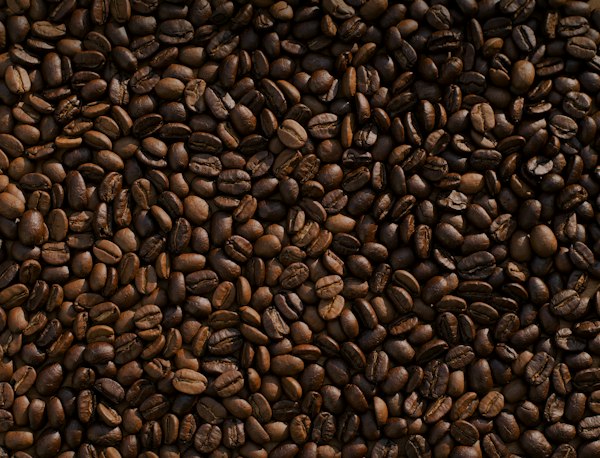
Coffee beans being sorted by hand
Why Origin Matters for Flavor
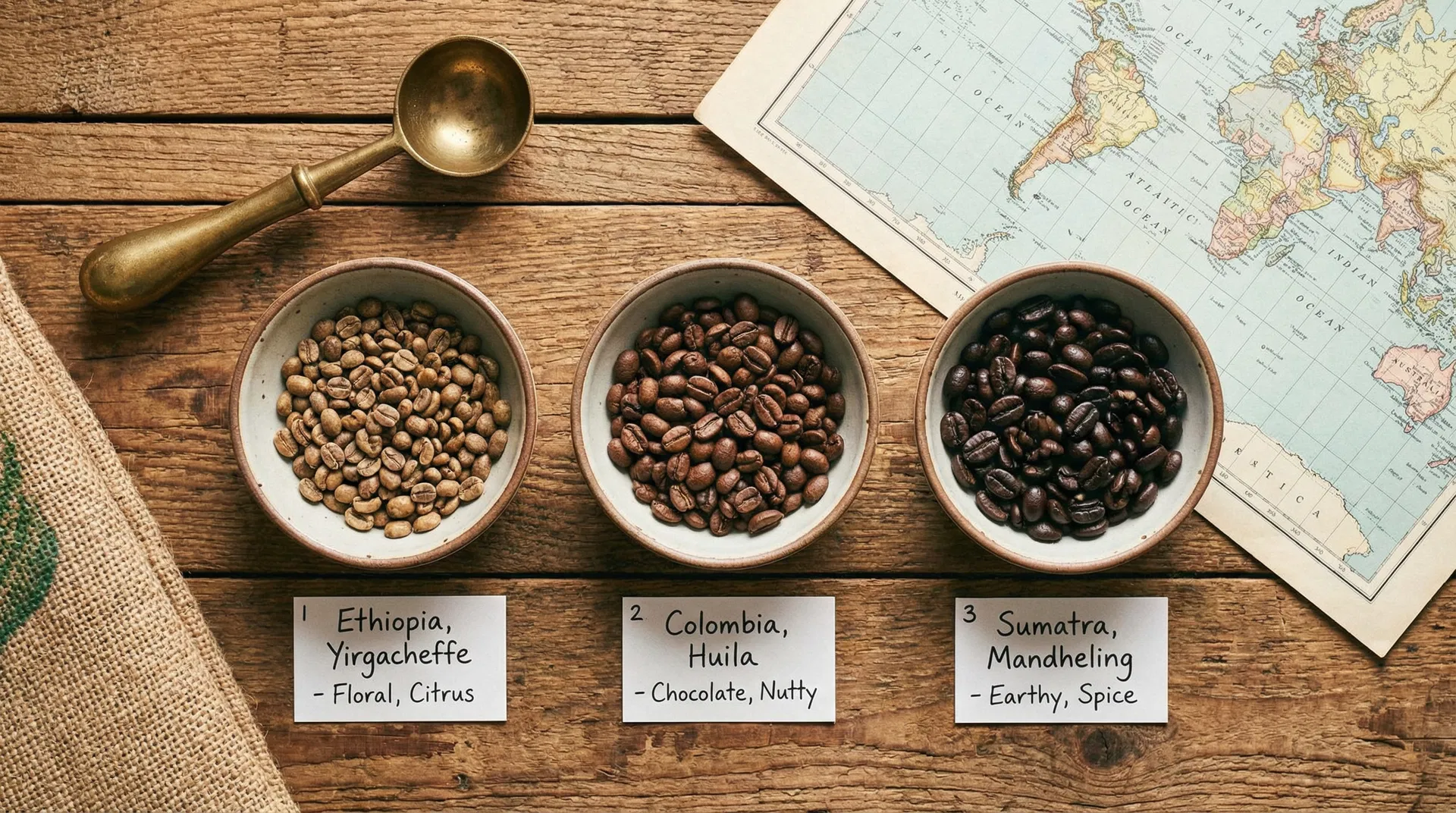
Coffee is an agricultural product, and like wine, its flavor is profoundly shaped by terroir — the combination of soil, altitude, climate, and processing methods unique to where it's grown. Ethiopian Yirgacheffe beans taste nothing like Brazilian Santos, even when roasted identically. The Ethiopian beans might burst with blueberry and jasmine notes, while the Brazilian ones offer nutty, chocolatey sweetness.
Altitude plays a particularly important role. Beans grown above 1,500 meters mature more slowly, developing denser cell structures and more complex sugars. This translates to brighter acidity and more nuanced flavors in the cup. It's why high-altitude origins like Ethiopia, Kenya, and Colombia consistently produce the most celebrated specialty coffees.
Single Origin vs. Blends
Single origin isn't inherently better than blends — they serve different purposes. Single origins showcase the unique character of a specific place and time. They're the coffee equivalent of a single-vineyard wine: distinctive, sometimes challenging, and meant to be savored on their own terms.
Blends, on the other hand, are crafted for consistency and balance. A skilled roaster combines beans from different origins to create a flavor profile that's reliable cup after cup, season after season. Your favorite café's house espresso is almost certainly a blend, designed to taste great with milk and deliver a consistent experience every morning. Many of the world's most beloved coffees — including most espresso — are expertly crafted blends.
How to Buy Single Origin Coffee
When shopping for single origin coffee, look for specificity on the label. A bag that lists the country, region, farm name, altitude, processing method, and harvest date is telling you the roaster cares about traceability. Vague labels like 'single origin African blend' are marketing fluff.
Freshness matters enormously with single origin coffee. These beans are prized for their distinctive flavors, which fade quickly after roasting. Look for a roast date (not just a 'best by' date) and try to buy beans roasted within the past 2–4 weeks. Store them in an airtight container away from light and heat.
Finally, consider brewing method. Single origin coffees often shine brightest in pour-over, AeroPress, or other filter methods that highlight clarity and nuance. If you primarily drink espresso with milk, a well-crafted blend might actually serve you better than a delicate single origin whose subtle flavors get lost under steamed milk.