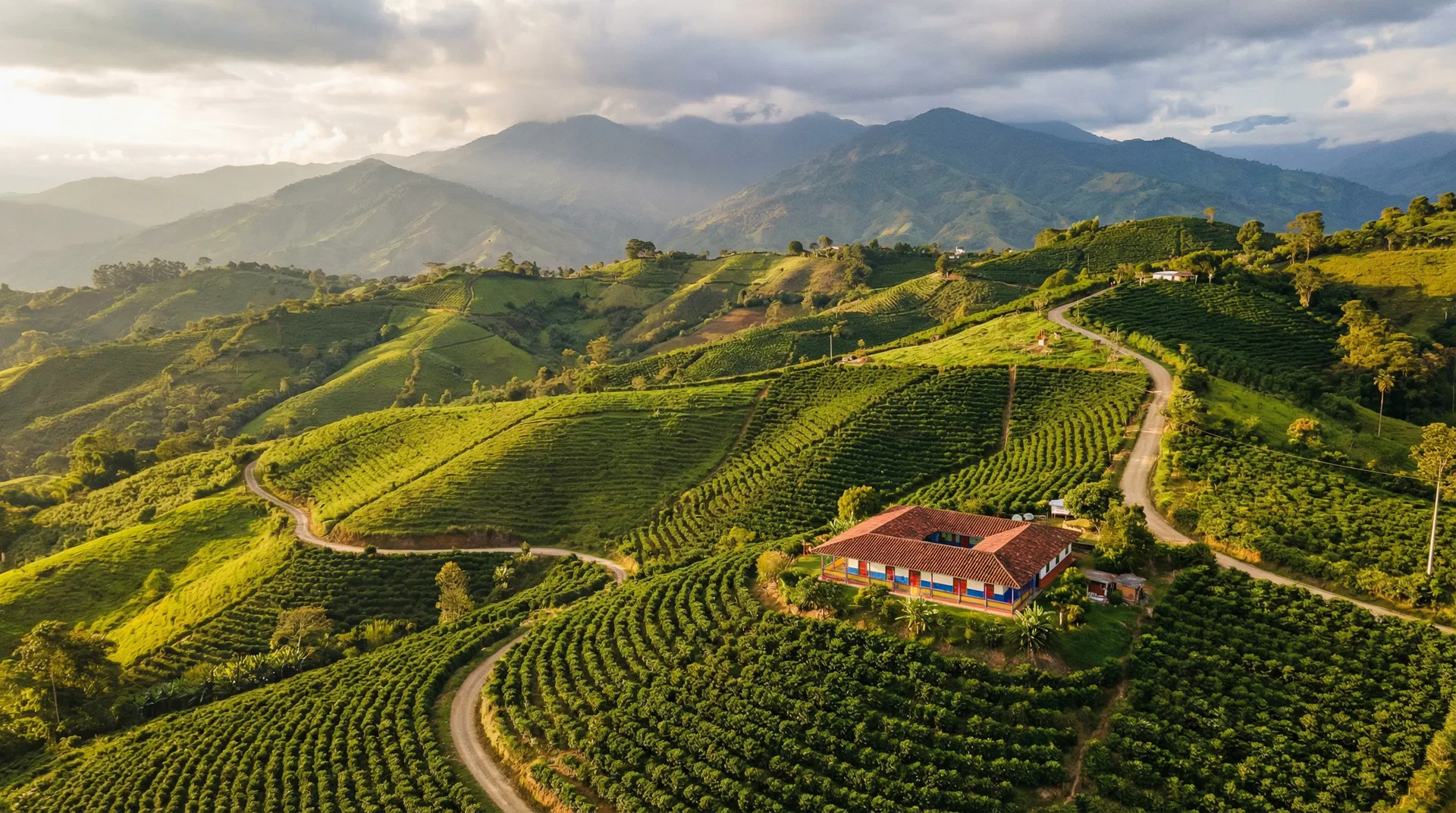
Nestled in the heart of Colombia's Andes mountains lies the Eje Cafetero — the Coffee Triangle. Spanning the departments of Caldas, Quindío, and Risaralda, this UNESCO World Heritage Cultural Landscape is where some of the world's finest Arabica coffee is grown. With its dramatic volcanic soil, perfect altitude, and year-round mild climate, the region produces beans that are celebrated globally for their balanced sweetness, bright acidity, and clean finish.
Why Colombian Coffee Is Special
Colombia's geography is uniquely suited to coffee cultivation. The Coffee Triangle sits between 1,200 and 2,000 meters above sea level — the sweet spot for Arabica development. The volcanic soil is rich in minerals, and the region receives consistent rainfall distributed across two distinct wet seasons, allowing for two harvests per year.
Unlike many coffee-producing countries that harvest once annually, Colombia's dual harvest means fresh coffee is available almost year-round. The main harvest (October–January) and the 'mitaca' or fly crop (April–June) each produce beans with slightly different characteristics, giving roasters a diverse palette to work with.
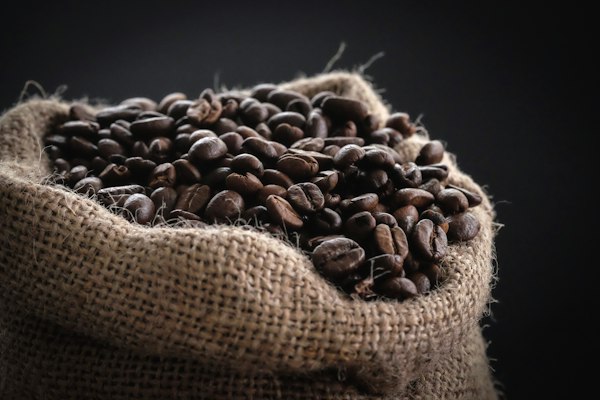
Coffee cherries ripening on the branch
Visiting the Fincas
The best way to experience the Coffee Triangle is by visiting working coffee farms, known as 'fincas.' Many have opened their doors to tourists, offering guided tours that walk you through every stage of production — from seedling nurseries to cherry picking, wet processing, drying patios, and finally, roasting and cupping.
Hacienda Venecia near Manizales is one of the most popular, offering overnight stays in a beautifully restored colonial farmhouse surrounded by coffee plants. Finca El Ocaso in Salento provides intimate tours where you can pick cherries yourself and taste the difference between varieties like Castillo, Caturra, and Colombia. Don Elías, a small family farm accessible by a scenic hike from Salento, offers one of the most authentic and affordable experiences.
The Towns of the Triangle
Salento is the jewel of the Coffee Triangle — a colorful town of painted balconies, cobblestone streets, and stunning views of the Cocora Valley, home to Colombia's national tree, the towering wax palm. The town's main plaza is lined with cafés serving locally grown coffee, and the surrounding countryside offers world-class hiking.
Manizales, the capital of Caldas, is a university city perched dramatically on a ridge with views of the Nevado del Ruiz volcano. Pereira and Armenia, the other two departmental capitals, serve as practical bases with good transportation connections. Each town has its own character, but all share the warm hospitality that Colombians call 'amabilidad.'
Tasting Notes: What to Expect
Coffee from the Triangle typically exhibits a medium body with bright, citrusy acidity and notes of caramel, red apple, and milk chocolate. Higher-altitude farms in Caldas tend to produce more complex, fruit-forward cups, while lower elevations in Quindío yield sweeter, nuttier profiles.
When cupping at farms, pay attention to how processing methods affect flavor. Washed (wet-processed) Colombian coffees are clean and bright — the country's signature style. But a growing number of producers are experimenting with natural and honey processing, creating coffees with intense berry sweetness and wine-like complexity that challenge everything you thought you knew about Colombian coffee.
Planning Your Trip
The Coffee Triangle is accessible via flights to Pereira or Armenia from Bogotá, Medellín, or Cartagena. The best time to visit is during harvest season (October–January) when farms are buzzing with activity and the landscape is dotted with red coffee cherries. The dry months of June–August also offer excellent weather for hiking.
Budget at least three to four days to explore properly. Stay at a coffee finca for the full immersion experience, visit the Cocora Valley, explore Salento's artisan shops, and take your time cupping coffee at different altitudes. The Coffee Triangle isn't just a destination for coffee lovers — it's one of South America's most beautiful and welcoming regions, where every cup tells the story of the land and people who made it possible.