Ethiopia is where coffee began. According to legend, a goat herder named Kaldi noticed his goats dancing with unusual energy after eating berries from a certain tree. He brought the berries to a local monastery, where monks discovered that a drink made from them kept them alert during long hours of prayer. Whether or not the legend is true, Ethiopia's relationship with coffee stretches back over a thousand years — and nowhere is that relationship more beautifully expressed than in the traditional coffee ceremony.
The Ceremony Unfolds
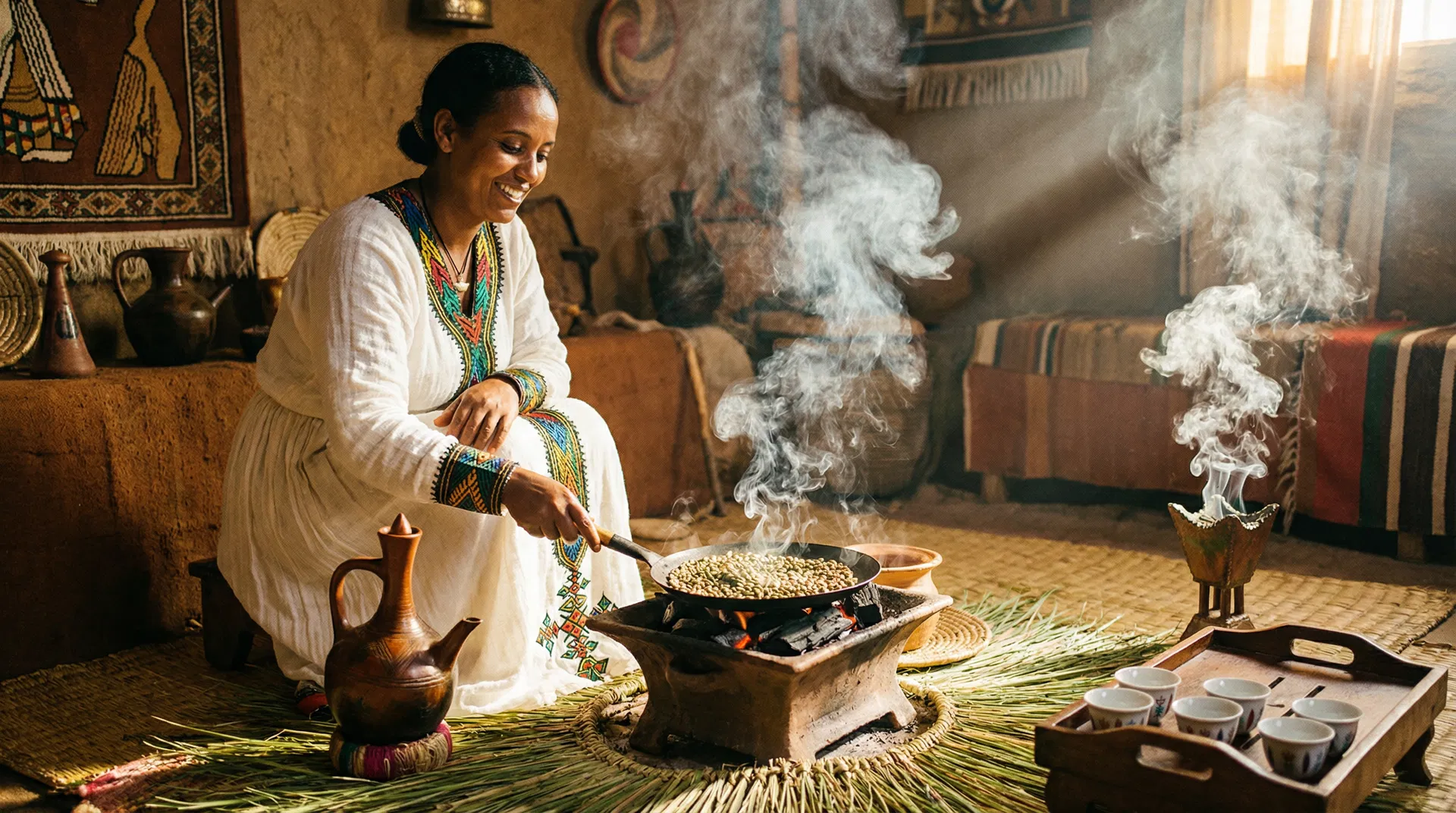
The Ethiopian coffee ceremony, known as 'buna' in Amharic, is a daily ritual that can last two to three hours. It begins with the host — traditionally a woman — washing green coffee beans by hand, removing any debris or defective beans. She then roasts the beans in a flat pan called a 'menkeshkesh' over a small charcoal brazier, stirring constantly as the beans crackle and darken.
As the beans roast, the host carries the smoking pan around the room, wafting the fragrant smoke toward each guest. This is a moment of communal appreciation — guests lean in, inhale deeply, and express their pleasure. The aroma of freshly roasting coffee mingling with burning frankincense creates an atmosphere that's both sacred and deeply social.
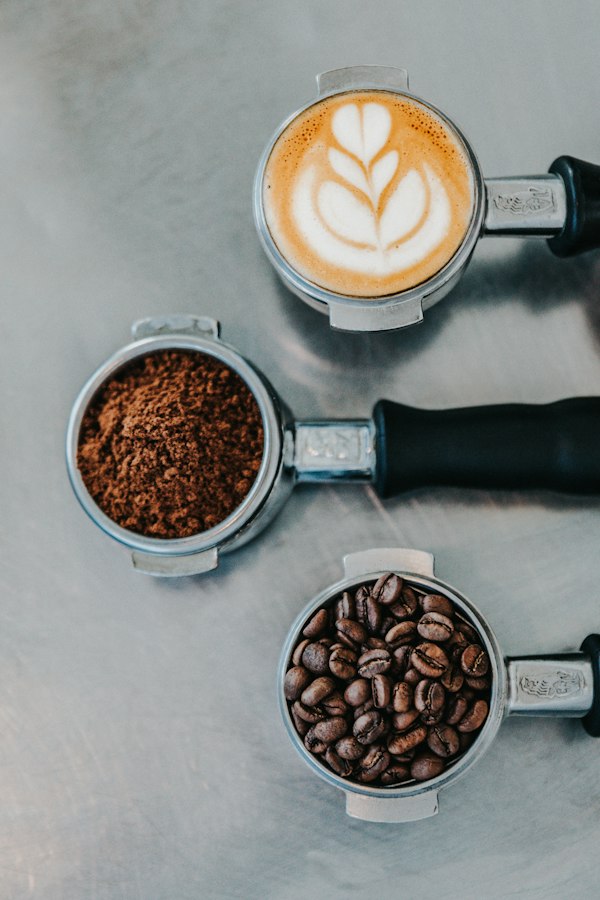
Traditional Ethiopian coffee cups arranged on a tray
Grinding and Brewing
Once roasted to a deep brown, the beans are ground by hand using a wooden mortar and pestle called a 'mukecha' and 'zenezena.' The rhythmic pounding is itself part of the ceremony — a meditative sound that signals the coffee is almost ready.
The ground coffee goes into a 'jebena,' a beautiful clay pot with a round base, long neck, and straw lid. Water is added and the jebena is placed directly on hot coals. When the coffee boils and rises up the neck, the host removes it from the heat, lets it settle, and repeats the process. The coffee is then poured from a height into small handleless cups called 'cini,' a technique that aerates the coffee and filters out grounds.
Three Rounds of Meaning
The ceremony always involves three rounds of coffee, each with its own name and significance. The first round, 'abol,' is the strongest and represents the initial connection between host and guests. The second round, 'tona,' is slightly weaker as the same grounds are re-brewed, symbolizing deepening relationships. The third round, 'baraka,' meaning 'blessing,' is the lightest and is considered a benediction — leaving before this final round is considered disrespectful.
Sugar is the traditional sweetener, though in some regions salt or butter is used instead. Popcorn or roasted barley is often served alongside as a snack. The ceremony is accompanied by conversation — it's a time for neighbors to share news, resolve disputes, celebrate milestones, and strengthen community bonds.
Cultural Significance Today
In modern Ethiopia, the coffee ceremony remains a cornerstone of daily life, especially in rural areas. It's performed when welcoming guests, celebrating holidays, mourning losses, or simply as a daily social gathering. The ceremony transcends religion and ethnicity — it's practiced by Christians, Muslims, and people of all backgrounds across the country.
For the Ethiopian diaspora, the ceremony serves as a powerful connection to home. In cities like Washington D.C., which has the largest Ethiopian population outside Africa, coffee ceremonies are held in homes, restaurants, and community centers, preserving cultural identity across generations.
Experiencing It Yourself
If you ever visit Ethiopia, participating in a coffee ceremony is an essential experience. Many hotels and cultural centers in Addis Ababa offer ceremonies for visitors. But the most authentic experience is being invited into someone's home — a gesture of genuine hospitality that embodies everything the ceremony represents.
You can also create a simplified version at home. Purchase Ethiopian green coffee beans, roast them in a pan on your stove, grind them fresh, and brew in any pot. Serve in small cups with sugar, and most importantly, share the experience with people you care about. The ceremony reminds us that coffee at its best isn't about the drink — it's about the human connections it creates.